
Hi Savvys,
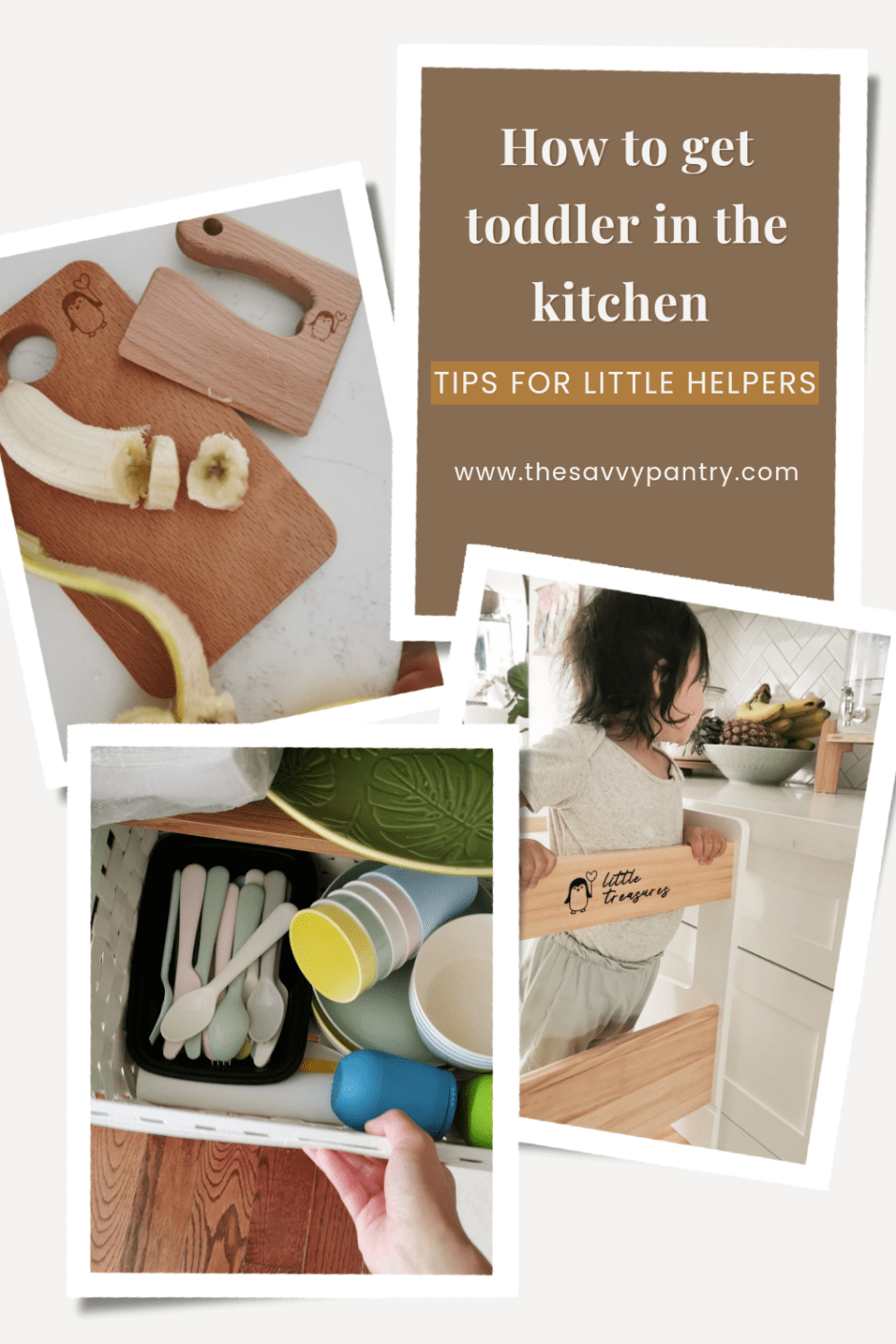
Involving children in the kitchen can be a delightful way to foster independence, responsibility, and a love for cooking. A Montessori-friendly kitchen is designed to be accessible, safe, and engaging for young chefs. As a food, recipe developer and mother of two, it’s important for me to get my kids in the kitchen as much as possible! Here are some tips on how we set up our kitchen and dining room area to encourage our kids to experiment and learn in the kitchen!
Learning Tower
A learning tower is a fantastic investment for any Montessori kitchen. It provides a safe and sturdy platform for children to stand on, bringing them up to counter height so they can fully participate in kitchen activities. We love this one from Little Treasures – use code THESAVVYPANTRY for 5% off your order!)
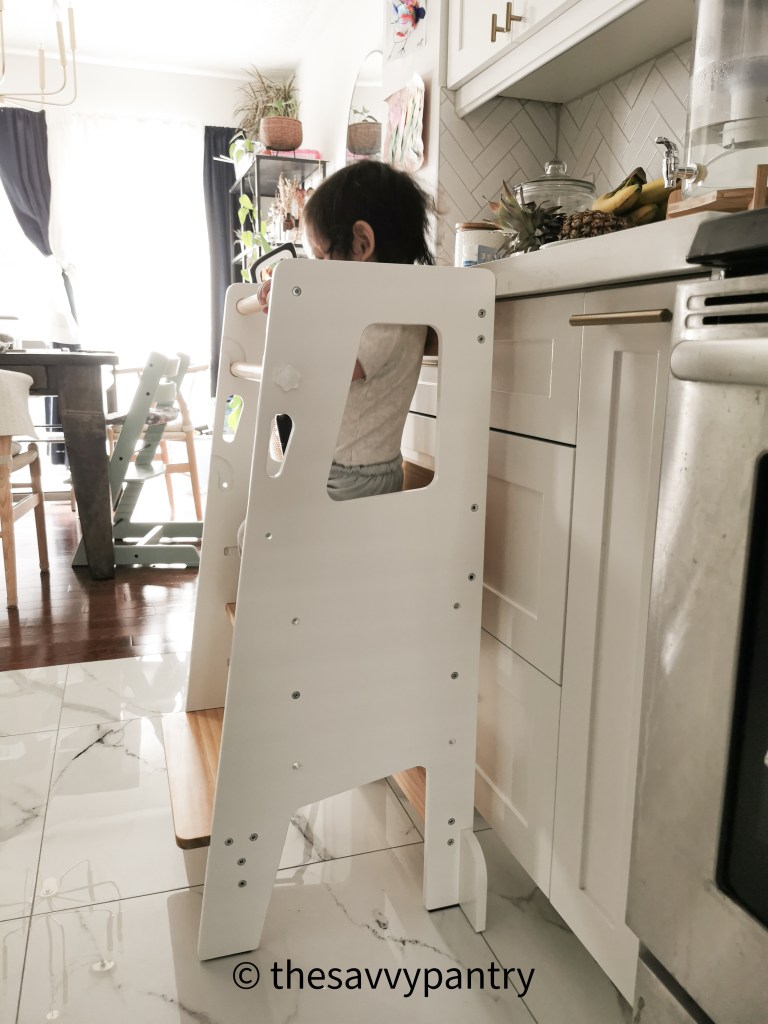
- Safety: Ensure the tower has safety rails and a stable base. Some models are adjustable, growing with your child.
- Location: Place the learning tower in a spot where your child can easily access the counter but is away from potential hazards like the stove.
- Involvement: Encourage your child to use the learning tower whenever they want to help with cooking or baking. It’s an excellent way to include them in everyday tasks.
Montessori Cutting Board and Cutter
A child-friendly cutting board and cutter are essential for encouraging kids to participate in food preparation. These should be safe, easy to use, and appropriate for their age and skill level.
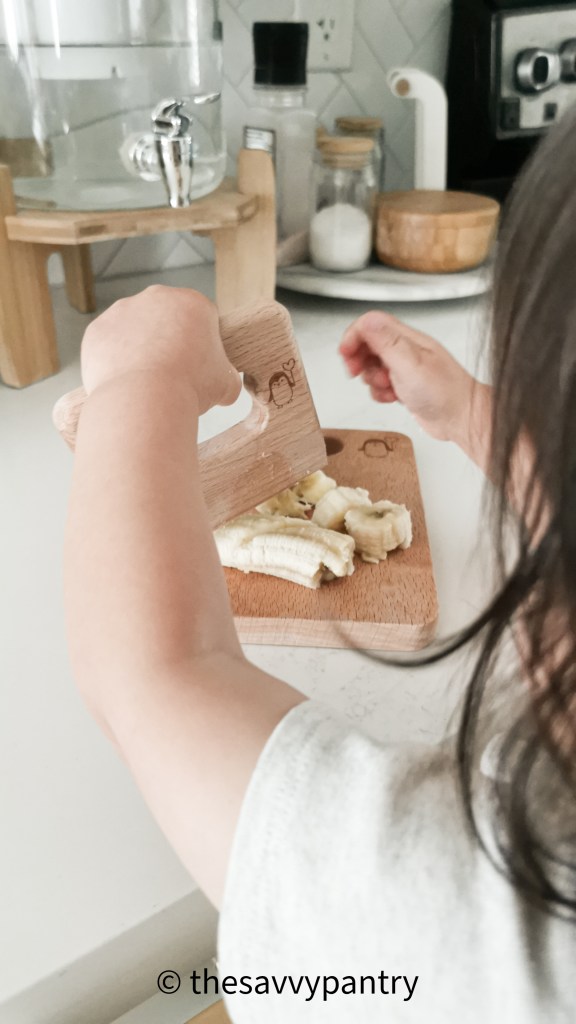
- Cutting Board: Opt for a smaller board that’s stable and non-slip. A board with a handle can also help with maneuverability. We love this one from Little Treasures – use code THESAVVYPANTRY for 5% off your order!.
- Cutter: Start with a crinkle cutter or a child-safe serrated knife. These tools allow children to cut soft fruits and vegetables while minimizing the risk of injury. Our little one loves this one (use code THESAVVYPANTRY for 5% off your order) and it’s easy for them to grab and cut food with.
Montessori Placemat
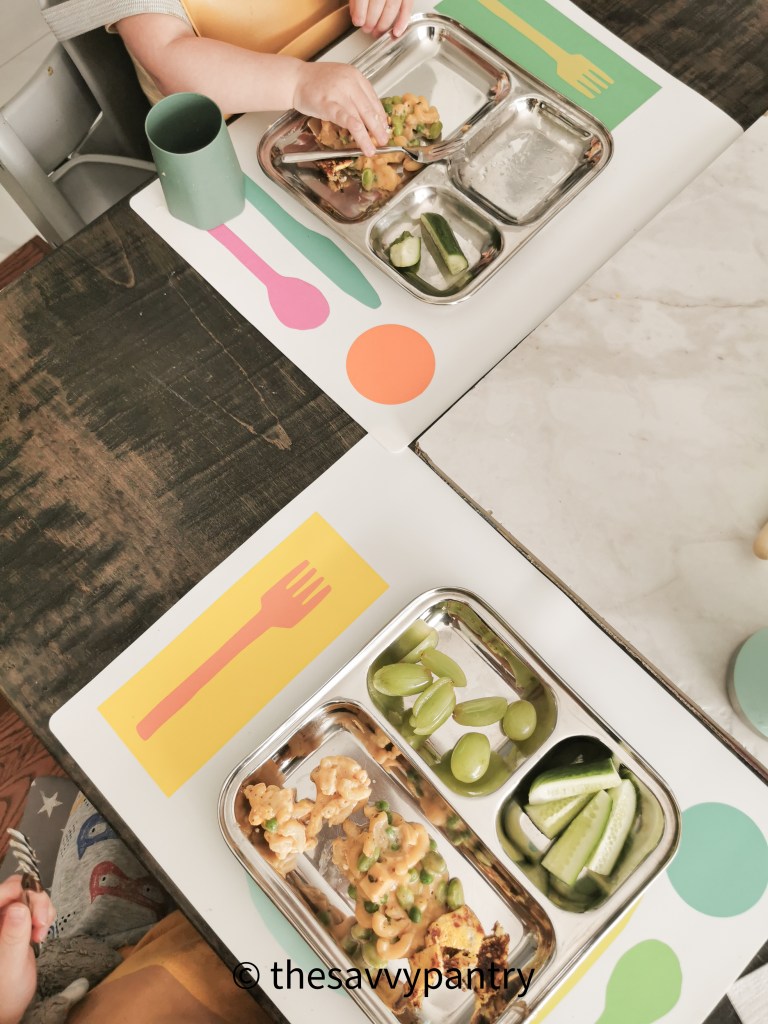
A Montessori placemat is a simple but effective tool for teaching children about table setting and organization. Typically, it includes outlines of where each item should be placed: the plate, utensils, cup, and napkin. Here’s how to incorporate it into your kitchen:
- Design: Choose a placemat with clear, durable outlines that can be easily cleaned. I love this on from Lovevery.
- Placement: Keep it within reach so children can set the table independently.
- Usage: Encourage your kids to use the placemat during every meal, reinforcing the habit of neatness and order.
Montessori Utensils
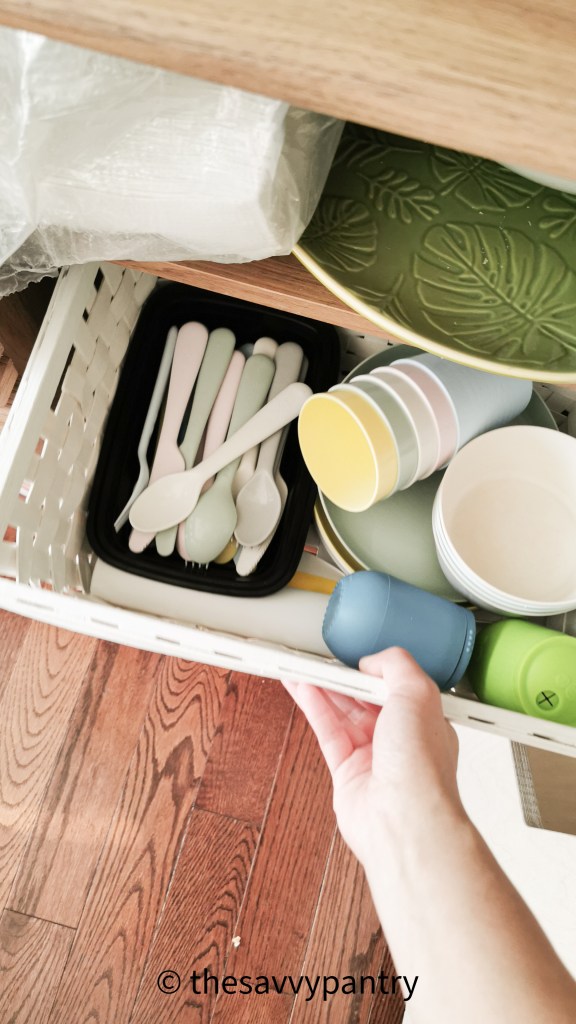
Providing child-sized utensils helps children develop fine motor skills and confidence in handling kitchen tools. Look for utensils that are sturdy, safe, and appropriately sized for little hands. Creating an area where it is easily accessible for them to set their own place setting is also an important skill and allows them to take pride in contributing to meal time.
- Spoons and Forks: Choose smaller, rounded utensils that are easy to grip.
- Knives: Start with a butter knife or a special child-safe knife designed to cut food without risking injury.
- Tongs and Spatulas: These tools are excellent for improving hand-eye coordination and can be used for a variety of tasks like flipping pancakes or serving salad.
Practical Tips for a Montessori-Friendly Kitchen
- Organize Accessibility: Keep frequently used items within easy reach of your child. This includes utensils, ingredients, and cleaning supplies.
- Clear Instructions: Provide simple, clear instructions for tasks. Break down steps into manageable chunks to help your child understand the process.
- Patience and Encouragement: Allow your child to make mistakes and learn from them. Celebrate their efforts and progress, no matter how small.
- Safety First: Always supervise your child in the kitchen, especially when using heat or sharp tools. Teach them about kitchen safety rules early on.
- Incorporate Fun: Make kitchen time enjoyable by involving your child in choosing recipes, tasting ingredients, and decorating finished dishes.
Creating a Montessori-friendly kitchen is a wonderful way to encourage your kids to experiment and develop a love for cooking. By providing the right tools and environment, you can foster their independence and confidence, setting the foundation for lifelong culinary skills. Happy cooking!
Comment below on if you would like to share some tips from your kitchen!
Now set forth and be savvy!
 The Savvy Pantry